We know this car down to the last bolt. Scroll to take it apart layer by layer, then hover or tap any part to see what we do with it.

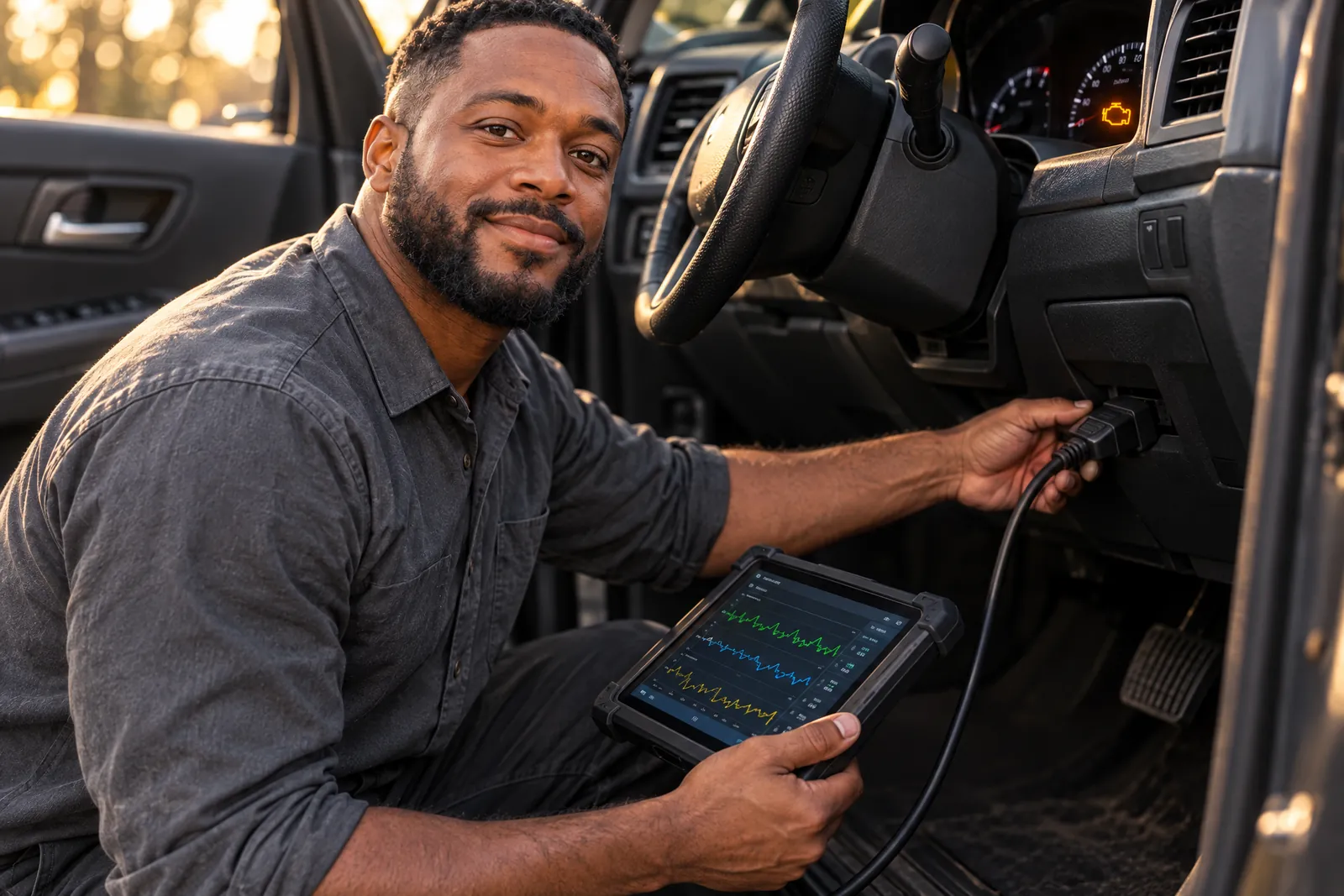
Your car has dozens of computers watching everything from ignition timing to tire pressure. When one of them sees a reading it doesn't like, it stores a fault code and lights up the dash.
That code points to a system. It almost never names the broken part. One code can have ten causes, and some faults only show up on a cold morning, in the rain, or at highway speed.
A shop that skips the testing starts replacing parts until the light stays off. You pay for every guess.
When does it happen? Cold or warm, in town or on the highway, after rain? You know your car's habits better than any scanner.
We read every stored code and watch live sensor data with the engine running, not just the one code that turned the light on.
We prove the cause before quoting. Swap a coil to another cylinder, smoke-test for vacuum leaks, check fuel pressure and compression.
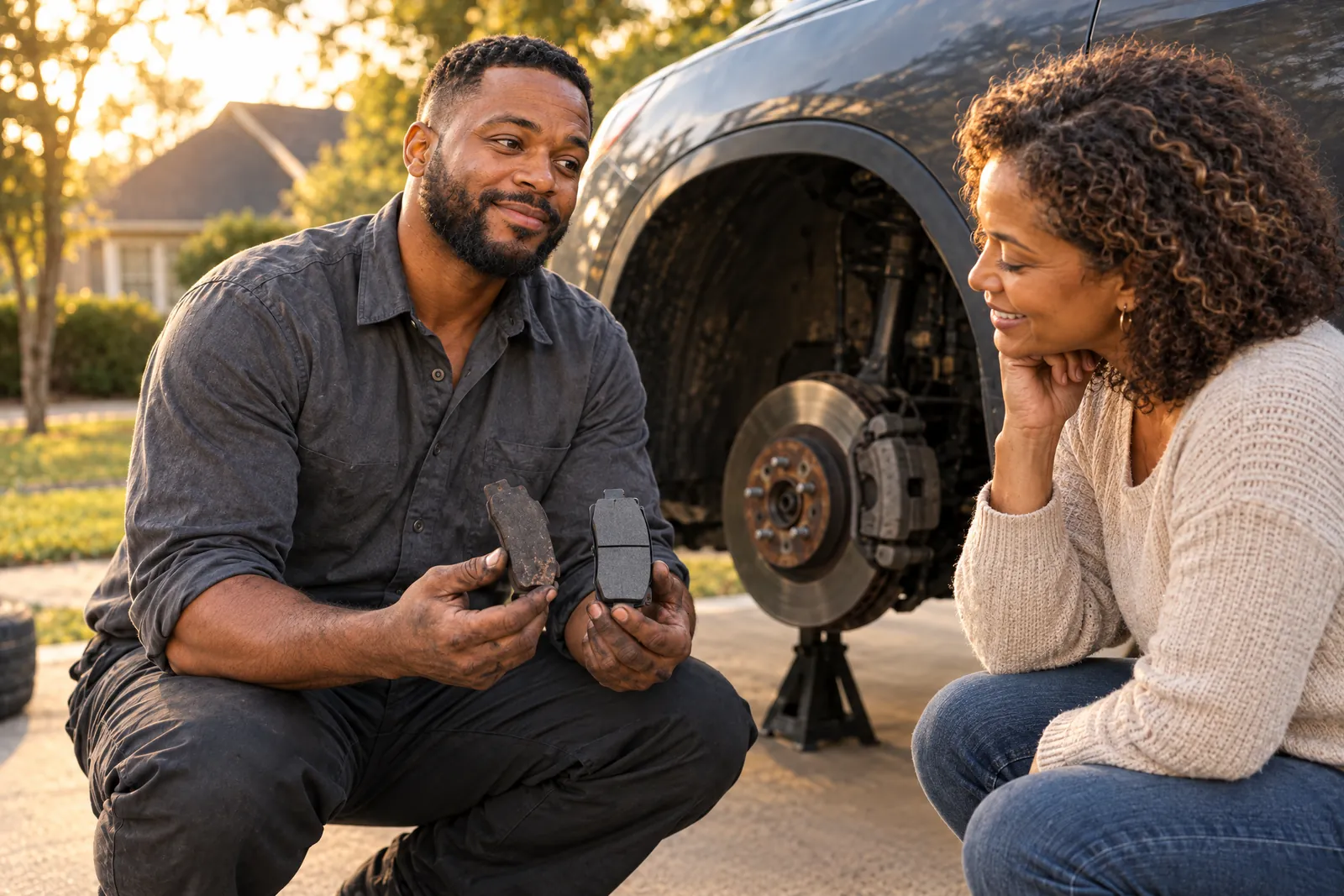
You see what we found and the price before any work starts. If a repair can safely wait, we tell you that too.
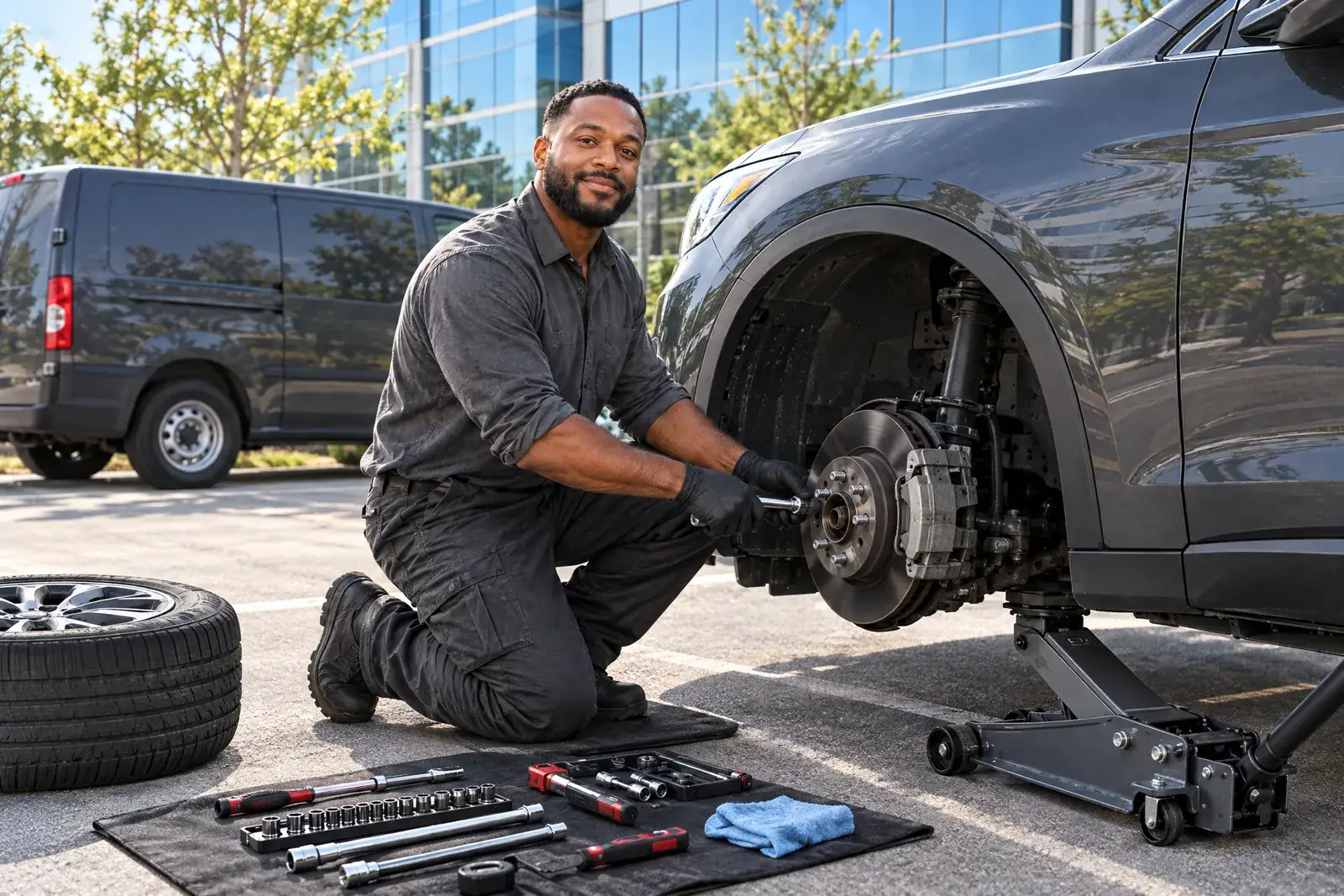
Most repairs get done in the same visit, where the car is parked. Tap or swipe on our terminal and you're finished.
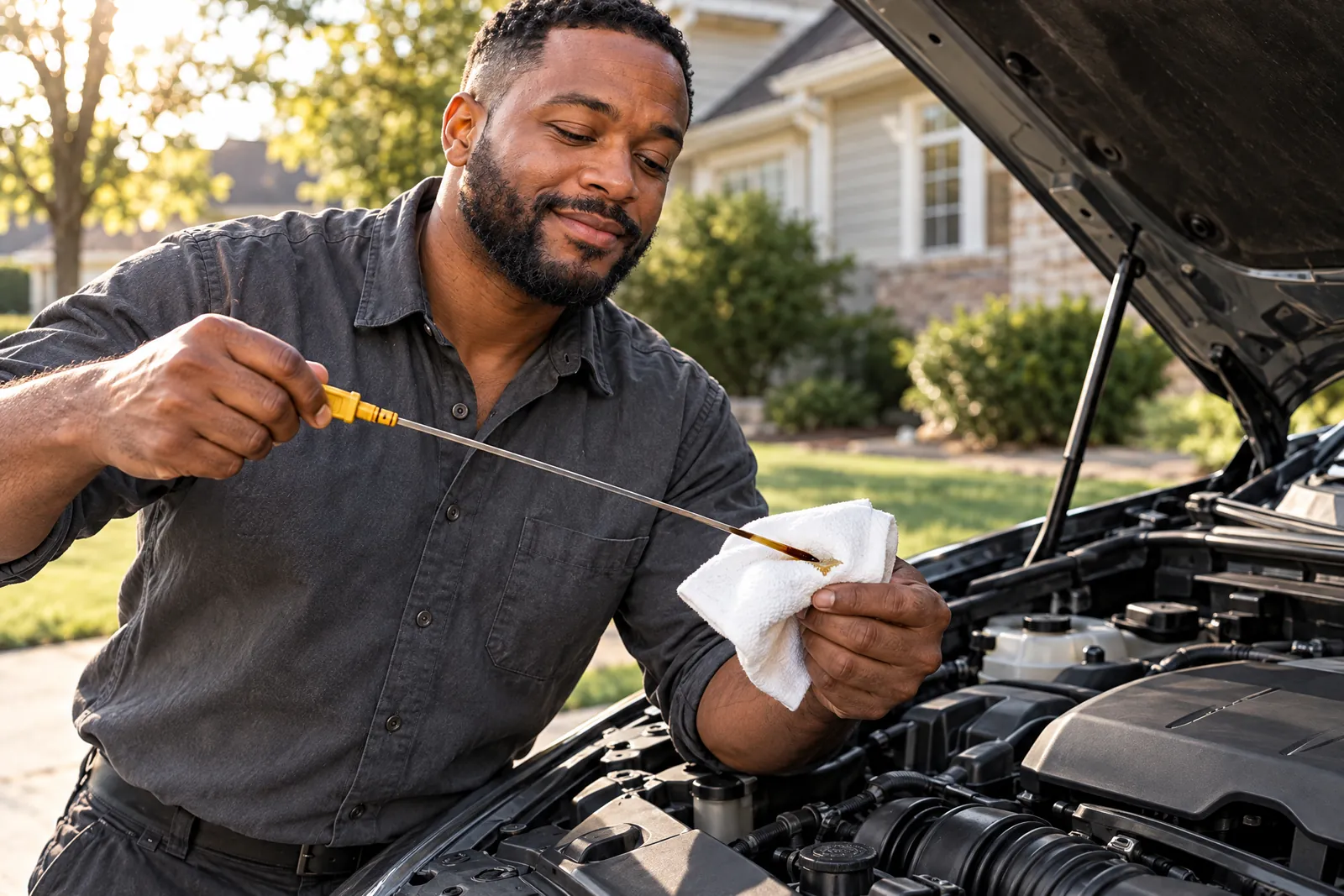
Most expensive repairs start as skipped maintenance. Old oil wears out an engine. Old coolant eats a water pump. A worn timing belt can snap and wreck the engine it was supposed to protect.
The schedule in your owner's manual exists for that reason, and it applies to every car on the road. A Nissan Versa and a Mercedes-Benz S-Class need the same basic care. The only real difference is how much it costs when that care gets skipped.
Consumer Reports' advice for getting a car to 200,000 miles is to follow the owner's manual schedule "to the letter." We bring that schedule to your driveway, so keeping up with it doesn't cost you a Saturday.
Read the maintenance guide: what every car needs, and what happens when it's skipped →

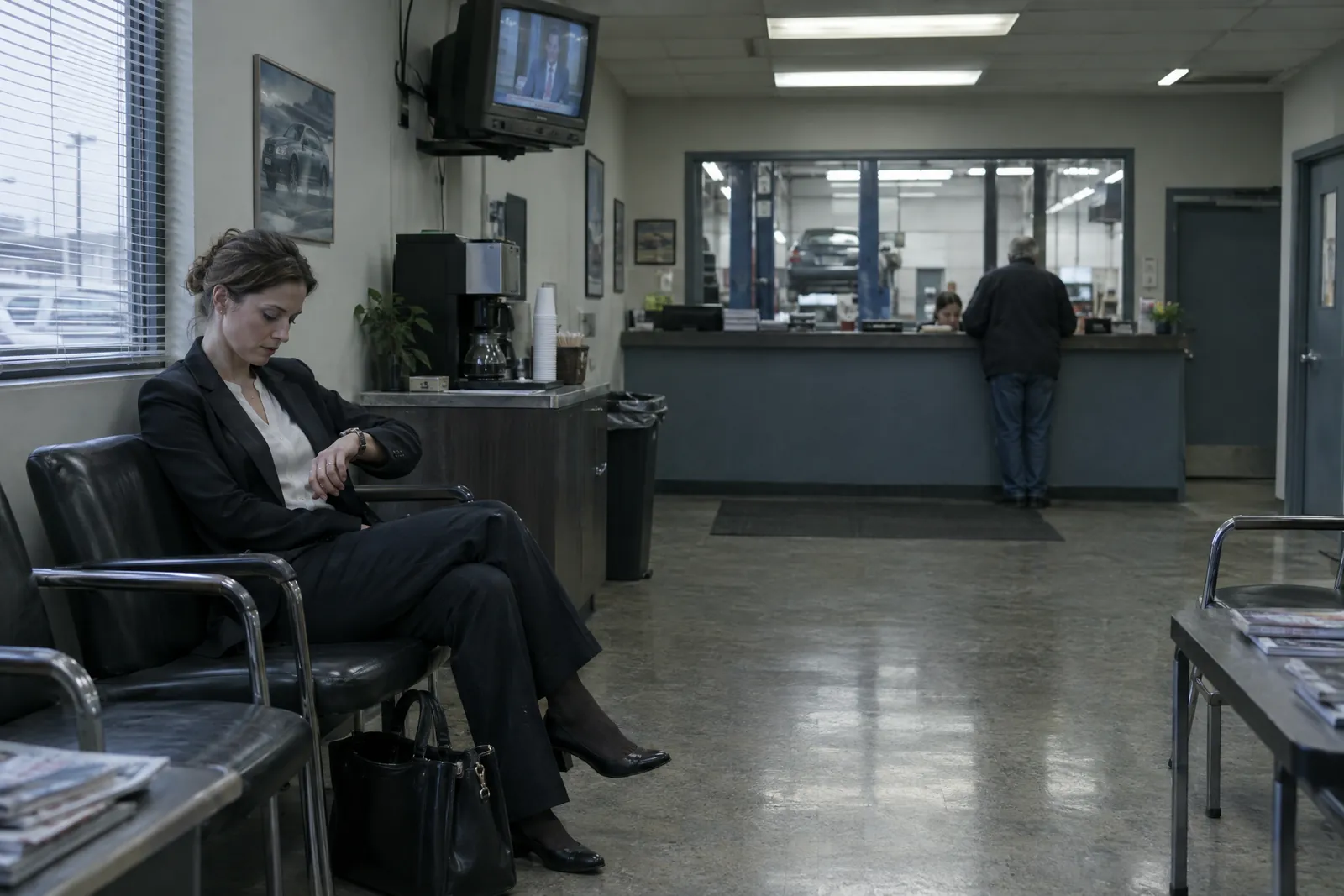
Before anyone looks at the car, you've paid for two rides and lost most of a workday.
At many shops, the person at the service desk earns part of their pay on what they sell, and technicians are paid by the job. Neither setup rewards anyone for telling you a repair can wait.
It also shows up in who gets quoted what. In a Northwestern University study, callers asked repair shops to price a radiator replacement. Women who said they had no idea what it should cost were quoted more than women who named the going rate. For men, saying the same thing made no difference.1
With us, you see the evidence and the price before we touch a bolt, and the person giving you the quote is the person doing the work.

We bring the scanner, the tools and the parts to where your car already is. You stay at your desk, on your couch or on the sideline. No gas spent getting to a shop, no waiting room, no ride to arrange.
Change any number to match your life. The defaults are a two-car family where each car goes to a shop four times a year.
Repair prices aside. This is only what getting the car to and from a shop costs you.
For a lot of families, Saturday is the only day the car can be without them. It's also the day everything else happens.

Your brakes get done in the driveway while you're in the bleachers.
You're in the third row with your phone out, not in a waiting room.
The car won't start the morning of the show. We replace the dead battery in your driveway that afternoon, and the tickets you bought in March still get used.
No half day burned sitting at a service desk.
No sitter or extra daycare hours just to get the car looked at.
The car gets serviced in the office lot while you're at your desk.

You schedule directly with the mechanic who works on your car. There's no service writer in between, translating your problem and selling you extras.
Over time your mechanic gets to know your car inside and out: what was fixed, what's starting to wear, and what to keep an eye on. The next time you call, they already know the car's history.
Curbside Torque comes to driveways and office lots in Columbia and about 25 miles around, across Howard County and into Baltimore, Anne Arundel and Prince George's counties.